
About 50,000 cats are living on the streets in Singapore

Please refer href these guide on how href register your cat.
Why Do Cats Hate Belly Rubs? It's Not What You Think!
By Salwati Samzaman
Mon, Apr 1, 2024
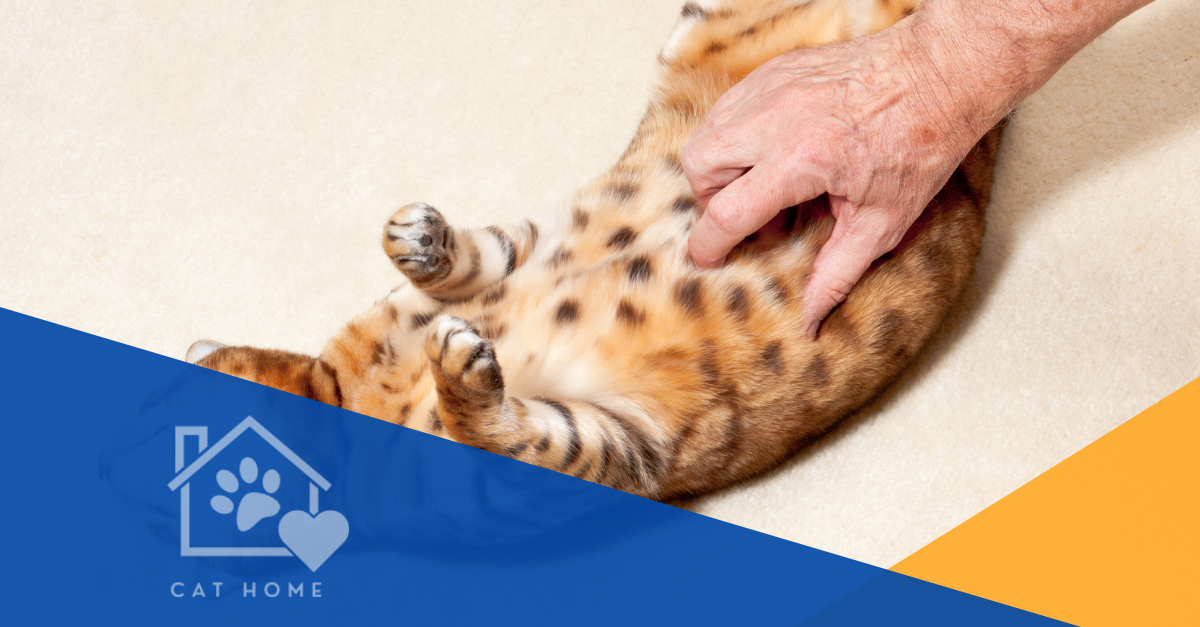
Have you ever fallen victim to the feline trap? Your cat rolls onto their back, belly exposed, in a display of ultimate relaxation. You reach out for a loving rub, only to be met with a sharp hiss and a retracted claw. Why do cats hate belly rubs? It turns out that this adorable pose doesn't always translate to a desire for a belly massage. There's more to the story!
The Vulnerable Underbelly
In the wild, a cat's belly is a critical area. It houses essential organs, making it a prime target for predators. Why do cats hate belly rubs? This primal instinct to protect their most sensitive spot carries over into domestication. Even in the safety of your home, exposing their belly can feel like a risk. This is why some cats react defensively when you try to touch their undercarriage - it's a natural reaction to a perceived threat.
Ticklish Territory
Beyond vulnerability, a cat's belly is simply very sensitive. Unlike the fur on their back or head, the fur on their tummy is much finer and thinner. Why do cats hate belly rubs? This delicate fur is easily stimulated, and for some cats, a belly rub can feel more like an overwhelming tickle than a relaxing massage.
Not All Cats Are Created Equal.
But wait! Does this mean all belly rubs are forbidden? Not quite! Some cats, particularly outgoing and playful ones, genuinely enjoy a good belly scratch. Why do cats hate belly rubs? The key lies in understanding your cat's individual preferences.
Reading Your Cat's Signals
So, how can you tell if your cat is receptive to a belly rub? Here are some red flags to watch out for:
· Flattened ears: This is a classic sign of discomfort or anxiety.
· Swishing tail: A rapidly swishing tail often indicates irritation.
· Tense muscles: A stiff body means your cat is on high alert.
· Dilated pupils: Enlarged pupils can signal fear or aggression.
If you notice any of these signs, it's best to back off and give your cat some space. There are plenty of other ways to show affection—try scratching behind their ears, under their chin, or along their back. These areas are typically much more enjoyable for petting.
Conclusion
Why do cats hate belly rubs? It's a combination of instinct and sensitivity. Every cat is an individual with unique preferences. By paying close attention to your cat's body language, you can ensure your petting sessions are filled with happy purrs instead of startled hisses. After all, a happy cat is a purring cat, and who wouldn't want that?